
Meta description: Stretch wrap explained: what it is, how it is made, the main types, key specifications, and how B2B buyers choose the right pallet wrap film for export shipping.
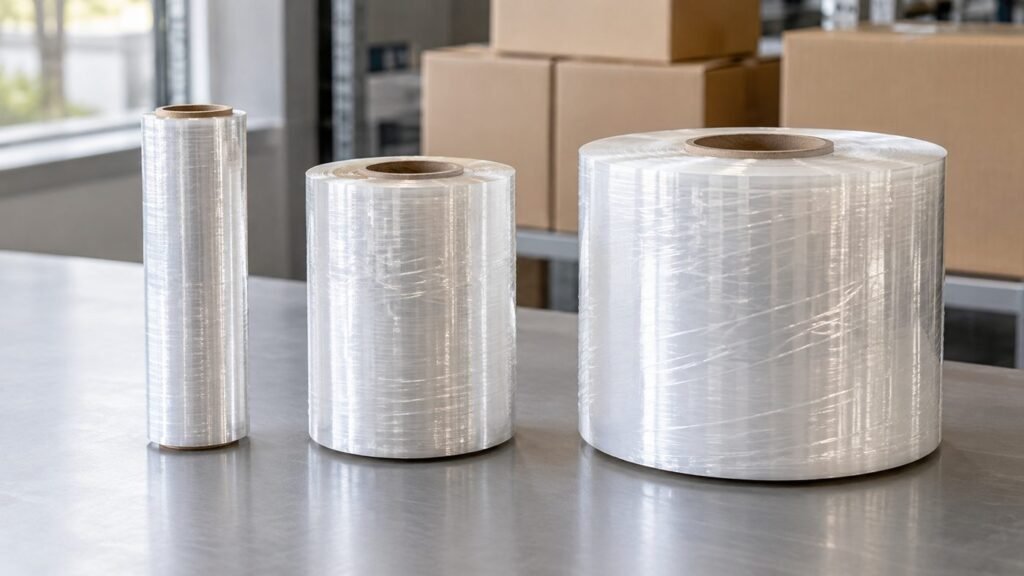
Stretch wrap is a highly stretchable plastic film, typically made from linear low-density polyethylene (LLDPE), that is wound tightly around palletized goods to hold them stable during storage and transport. Also called pallet wrap or stretch film, it keeps cartons, drums, and irregular loads secured against shifting, dust, and moisture throughout the supply chain.
Table of Contents
- What Is Stretch Wrap?
- How Is Stretch Wrap Manufactured?
- What Types of Stretch Wrap Are Available?
- Comparison of Main Stretch Wrap Types
- Cast vs Blown Stretch Wrap
- Common Applications of Stretch Wrap
- What Specifications Should Buyers Check?
- How to Choose the Right Stretch Wrap
- How to Inspect Stretch Wrap Quality
- What Information Should Be Included in an RFQ?
- How to Choose a Reliable Stretch Wrap Supplier
- Frequently Asked Questions
- Source Stretch Wrap from Pefilmpack
What Is Stretch Wrap?
Stretch wrap is a thin polyethylene film with high elastic memory. When it is stretched and wrapped around a load, the recovery force of the film pulls the load together and holds it as a single unit. This function is called load containment, and it is what distinguishes stretch wrap from other packaging films such as shrink film, which relies on heat to tighten.
Most industrial stretch wrap is produced from LLDPE resin, sometimes blended with metallocene LLDPE for higher strength and clarity. The film is thin—commonly in the range of 12 to 30 micron for pallet applications—yet it must resist puncture, resist tearing, and cling to itself without adhesive.
For B2B buyers, stretch wrap matters for three commercial reasons. First, film is a recurring consumable, so the specification directly affects cost per pallet wrapped. Second, containment quality determines whether cartons shift inside the container, which drives damage claims and customer disputes. Third, wrapping efficiency affects line speed and labour cost in warehouses that ship daily.
Pefilmpack supplies PE stretch film in hand and machine grades for exactly these applications—see the PE stretch film product category for the standard range.
How Is Stretch Wrap Manufactured?
Stretch film is made by two main extrusion routes: cast extrusion and blown coextrusion. The process steps below follow a typical cast line; the same logic applies to blown lines with an air-cooled bubble instead of a chill roll.
- Resin selection. LLDPE and metallocene LLDPE grades are chosen for stretch, cling, and strength. Resin choice sets the ceiling on elongation and puncture resistance—two properties buyers pay for.
- Additive blending. Tackifiers create cling, slip agents control friction on packaging lines, and colour masterbatch produces tinted or black film. Additive dosage affects cling consistency between batches, which is a common complaint area in distribution business.
- Coextrusion. Film is extruded in single-layer or, more commonly, three- or five-layer structures. Layers allow cling on one or both faces, a stiff outer skin, and a strong core layer—so layer structure determines whether the film is single-sided cling and how it unwinds.
- Thickness gauging. Online measurement controls film gauge across the web. Thickness tolerance decides how predictable the film is on a customer’s machine; loose tolerance shows up as breaks on one roll and sag on the next.
- Cooling and setting. On cast lines a chilled roller freezes the melt quickly, giving cast film its clarity and low noise. In blown lines, slower air cooling produces a hazier, tougher film.
- Slitting. The wide web is slit into standard widths such as 500 mm. Slitting quality determines edge straightness, which affects smooth unwinding on dispensers and machine carriages.
- Rewinding with core insertion. Film is rewound onto paper cores (commonly 3” / 76 mm or 2” / 50 mm) with the cling surface facing inward or outward as ordered. Winding tension and roll hardness affect how the last metres of a roll perform.
- Inspection and export packing. Rolls are checked for gauge, appearance, and winding, then packed in cartons and palletized for container loading. Export packing quality decides whether rolls arrive usable in humid or hot destination climates.
What Types of Stretch Wrap Are Available?
Hand stretch wrap
Hand stretch wrap is designed to be applied manually, usually with a hand dispenser. Rolls are lighter and narrower (commonly 450–500 mm wide) so operators can control tension by feel. It suits low daily volumes, mixed pallet sizes, and sites without equipment. Typical structures balance moderate elongation with comfortable unwinding.
Machine stretch wrap
Machine stretch wrap is engineered for powered pre-stretch carriages on semi-automatic and automatic wrapping machines. It tolerates high pre-stretch ratios, unwinds evenly at speed, and converts into a lower film cost per pallet. Machine grade is the standard choice for export operations wrapping dozens or hundreds of pallets per day.
Blown and cast stretch wrap
Blown film is tougher and more puncture-resistant, with higher cling that can be noisy to unwind. Cast film is clearer, quieter, and more consistent in gauge. The choice depends on load sharpness versus presentation and noise requirements.
Pre-stretched film
Pre-stretched film has already been stretched close to its limit during manufacturing. It requires little force to apply, which reduces operator fatigue in hand wrapping, and performs consistently because it barely shrinks back.
Colored and black stretch wrap
Colored and black stretch wrap—often searched as black pallet wrap or black stretch film—uses colour masterbatch in the extrusion process. Black film conceals load contents for theft and privacy control, masks mixed or promotional pallets, and reduces light exposure for sensitive goods. Tinted films are also used to differentiate product lines in warehouses.
Jumbo roll stretch film
Jumbo rolls are wide, heavy master rolls supplied to converters who slit them into hand or machine rolls locally. Buying jumbo stock is relevant for large-volume importers with their own slitting capacity, as it lowers material cost per kilogram.
Comparison of Main Stretch Wrap Types
| Type | How Applied | Typical Thickness (industry common) | Key Feature | Best Suited To |
|---|---|---|---|---|
| Hand stretch wrap | Manual dispenser | 12–20 micron | Flexible, no equipment needed | Low volumes, mixed loads |
| Machine stretch wrap | Pallet wrapping machine | 15–30 micron | High pre-stretch, consistent tension | High-volume export shipping |
| Cast stretch wrap | Hand or machine | 12–23 micron | Clarity, quiet unwind, even gauge | Presentation loads, retail supply |
| Blown stretch wrap | Hand or machine | 15–30 micron | Puncture resistance, strong cling | Sharp-edged, heavy loads |
| Pre-stretched film | Mostly hand | 8–12 micron | Light effort, minimal recoil | Labour-sensitive operations |
| Black / colored film | Hand or machine | 15–25 micron | Concealment, load privacy | High-value or mixed pallets |
Thickness figures are industry-common ranges, not guaranteed values; requirements may vary by application, market and applicable standard.
Selection advice: if you wrap fewer than roughly twenty pallets a day with varying sizes, hand film with a good dispenser is usually the economical route. If you run continuous export loading, machine film matched to your carriage and pre-stretch setting will almost always deliver a lower cost per securely wrapped pallet.
Cast vs Blown Stretch Wrap
| Attribute | Cast Stretch Wrap | Blown Stretch Wrap |
|---|---|---|
| Manufacturing | Chill-roll casting, fast cooling | Bubble blown, slow air cooling |
| Clarity | High transparency | Hazier, slightly milky |
| Puncture resistance | Moderate | High |
| Tear propagation | Tears can propagate once started | Resists tear propagation |
| Unwind noise | Quiet | Noticeably noisier |
| Cling | Consistent, controllable | Stronger, can feel sticky |
| Two-sided cling | Commonly available | Usually one-sided |
| Relative cost | Lower for standard grades | Higher energy cost in production |
Selection advice: choose blown film for loads with sharp corners, protruding nails, or heavy drums where a single puncture would ruin the wrap. Choose cast film when clarity, quiet operation, and consistent machine feeding matter more—typical for carton-only export pallets and retail-bound goods.
Common Applications of Stretch Wrap
Export pallet wrapping and container loading
Export loads face forklift handling, container vibration, weeks of storage, and stacking pressure. This is the most demanding application: film needs adequate holding force, puncture resistance matched to the load, and enough layers at the base where shear stress concentrates. For a deeper dive, see our guide on choosing PE stretch film thickness and width for export pallet wrapping.
Warehousing and distribution centers
Warehouse wrapping prioritises speed and consistency. Pallets are wrapped several times per journey through the facility, so film that unwinds smoothly and applies quickly reduces labour minutes per pallet. Machine film dominates this segment.
Moving and relocation
Moving wrap—the hand-applied film used by relocation companies and households—protects furniture, drawers, and bundled items. Hand-grade rolls, often in lighter weights and wider widths, are the standard product here. The same film family also serves retail bundle protection.
Bundling and unitizing
Narrow-width stretch film ties together small items—bottles, cans, profile offcuts—into shippable units without cartons. This use relies on cling and elongation rather than heavy containment.
Dust, moisture and light protection
Film provides a temporary barrier against dust and splashing water during storage and inland transport. Black and opaque films additionally shield light-sensitive goods and conceal high-value contents.
What Specifications Should Buyers Check?
- Thickness (micron / gauge): the primary cost and strength lever. Verify how tolerance is controlled across the roll, not just the nominal value.
- Width: commonly 450 mm or 500 mm for pallet wrap; narrower widths for bundling. Width must match your dispenser or machine carriage.
- Roll length and roll weight: determines how many pallets one roll wraps and how often operators change rolls.
- Core inner diameter: 3” (76 mm) is standard for machine film; 2” (50 mm) appears on some hand rolls. Confirm dispenser and carriage compatibility.
- Elongation and tensile properties: measured per ASTM D882 or ISO 527-3; these indicate how far the film stretches before breaking.
- Puncture resistance: commonly evaluated per ASTM D5748 for stretch wrapping film; critical for sharp loads.
- Tear resistance: Elmendorf tear per ASTM D1922 indicates how a film responds once nicked.
- Impact resistance: dart drop per ASTM D1709 for film toughness.
- Cling type: single-sided or two-sided cling changes how rolls behave in the dispenser and on stacked pallets.
- Clarity and haze: relevant for barcode scanning and presentation; measured per ASTM D1003 where specified.
- Grade: hand or machine, and the recommended pre-stretch ratio for machine film.
Specification ranges are typically agreed between buyer and supplier. Requirements may vary by application, market and applicable standard.
How to Choose the Right Stretch Wrap
- Load profile. Weight, height, and sharpness decide gauge and whether blown film is worth its premium. Heavy, sharp loads need stronger film; uniform carton loads tolerate thinner cast film.
- Application method. Confirm hand or machine, and for machines the carriage type, maximum roll diameter and weight, and pre-stretch setting. Film that ignores machine compatibility fails regardless of its data sheet.
- Transit conditions. Long ocean shipments, multiple handling points, stacking, and temperature extremes raise the containment requirement. Cold storage calls for film that stays flexible at low temperature.
- Concealment needs. If load contents should not be visible in transit or the warehouse, black stretch wrap solves privacy and tamper-evidence concerns at modest cost.
- Cost per pallet, not price per roll. Compare specifications using film consumed per wrapped pallet, including breakage and rewrap labour. A slightly dearer film with better pre-stretch behaviour frequently wins this calculation. More background is available in our article on how PE stretch film improves pallet load stability.
- Budget and consumption. Estimate monthly film tonnage from pallet count and wraps per pallet; this drives the specification conversation and container planning with your supplier.
How to Inspect Stretch Wrap Quality
Suitable for pre-shipment inspection:
- Dimensional checks: thickness sampling, width, roll length or weight, core diameter, roll end face condition.
- Surface inspection: gels, fish-eyes, streaks, wrinkles, colour consistency for tinted film.
- Unwind and cling check: manual unwind feel, cling behaviour, single- versus two-sided cling as ordered.
- Packing verification: carton condition, roll protection, palletisation, labels and shipping marks against the order.
Typically covered by supplier batch test records:
- Tensile strength and elongation (ASTM D882 / ISO 527-3).
- Puncture resistance (ASTM D5748) and tear resistance (ASTM D1922).
- Impact resistance (ASTM D1709), haze and transmittance (ASTM D1003) where specified.
The most decisive test is an application test: wrap representative pallets on the actual dispenser or wrapping machine, at production speed, and observe breakage frequency, coverage, and load stability. Laboratory data cannot fully replace this.
What Information Should Be Included in an RFQ?
- Product type: hand grade, machine grade, pre-stretched, or colored / black film.
- Material and film structure (single layer, three-layer, five-layer; LLDPE or blends).
- Dimensions: width, thickness, roll length or roll weight.
- Core size and core material.
- Colour, transparency, and any printing requirement.
- Performance targets: elongation, cling (one- or two-sided), puncture resistance.
- Applicable standard or test method, if your market requires one.
- Packing: rolls per carton, cartons per pallet, OEM label or private brand printing.
- Order quantity and trial order intention.
- Destination port and shipping terms.
- Intended application: load type, weight, wrapping method, machine model if applicable.
- Sample rolls or reference specifications from current supply.
How to Choose a Reliable Stretch Wrap Supplier
- Raw material control: consistent LLDPE grade sourcing, and transparency about whether virgin resin is used throughout.
- Manufacturing capability: cast or blown lines, number of coextrusion layers, online gauge control, and slitting/rewinding capacity.
- Quality system: batch retention, first-article confirmation, and documented pre-shipment inspection.
- Batch consistency: gauge tolerance, cling, and colour stability between production runs—the issues that generate distributor complaints.
- Test reports: what the report covers, which method it used, and when it was issued. A report is a snapshot, not a continuous guarantee.
- Sample policy: availability, lead time, and whether samples match the actual production batch.
- Customisation: width, thickness, roll weight, core size, colour, and private-label packing.
- Export experience: container loading plans, shipping marks, and documentation for your destination market.
- Lead time and peak-season capacity: confirmed against your consumption, not just quoted in general terms.
- Complaint handling: how claims are assessed, and how replacement or credit is decided.
Risk signals include quotations far below comparable resin-based cost, refusal to supply samples, vague answers about resin or additive systems, and specification sheets without tolerances.
Frequently Asked Questions
Why does stretch film break during wrapping?
Breakage usually comes from a mismatch between film and application: film too thin for the load, a carriage pre-stretch setting above the film’s capability, sharp edges without protection, or inconsistent gauge between batches. Matching the film grade to the machine setting and load profile resolves most cases.
Can stretch wrap be used in cold storage or outdoors?
Film becomes stiffer at low temperature and can lose performance in extreme heat under prolonged sunlight. For cold rooms or outdoor storage, specify film intended for low-temperature use and discuss exposure duration with the supplier. Requirements may vary by application, market and applicable standard.
What thickness of stretch wrap should I use for export pallets?
There is no universal answer. As industry-common practice, export pallets often use film in the 15–30 micron range depending on load weight and sharpness, but the correct value depends on wrapping method, pre-stretch, and transit conditions. Test on a real pallet before committing.
What is the difference between single-sided and two-sided cling?
Single-sided cling sticks only to the layer beneath it, so rolls do not stick to themselves while unwinding and adjacent wrapped pallets do not lock together. Two-sided cling gives stronger containment but requires care when handling rolls. Choice depends on equipment and stacking habits.
Can width, thickness, colour, and packing be customized?
Yes. Width, thickness, length, roll weight, core size, colour, and carton or label printing are all configurable from a manufacturer. Confirm the specification in the RFQ and verify it with samples before volume production.
How is stretch wrap packed for export?
Commonly, rolls are packed in cartons, stacked on pallets, stretch-wrapped, and strapped for container loading. Carton strength, pallet height, and moisture protection should be agreed with the supplier, especially for humid destination markets.
How should stretch film be stored?
Store rolls in a cool, dry place away from direct sunlight, keeping original packaging until use. Long exposure to heat and UV can degrade cling and mechanical properties over time, so warehouse conditions matter even before the film is applied.
Source Stretch Wrap from Pefilmpack
Weishan Litong Packing Material Co., Ltd. (Pefilmpack) manufactures PE stretch film and related packaging films for importers, wholesalers, distributors, logistics companies, warehouses, and export shippers. Our stretch film range covers hand and machine grades, with customisable width, thickness, roll weight, core size, colour, and printing. Production focuses on stable quality from resin selection through slitting and export packing, with flexible specifications to match different pallet loads, wrapping machines, and destination markets. As a factory-direct supplier, we support OEM packing and provide specification advice matched to real applications rather than generic quotations. For the full film family—including shrink film, cling film, and packing tape—see our product overview and the article on complete packaging film solutions for global buyers.
Request a Quote: send us your product type, size (width, thickness, roll weight), film structure, cling requirement, packaging preference, order quantity, and destination port, and our team will recommend a specification with samples for on-site testing via the contact page.