
Meta description: Hand stretch film vs machine stretch film compared: application method, cost per pallet, pre-stretch, consistency, and how buyers choose the right grade for your wrapping volumes.
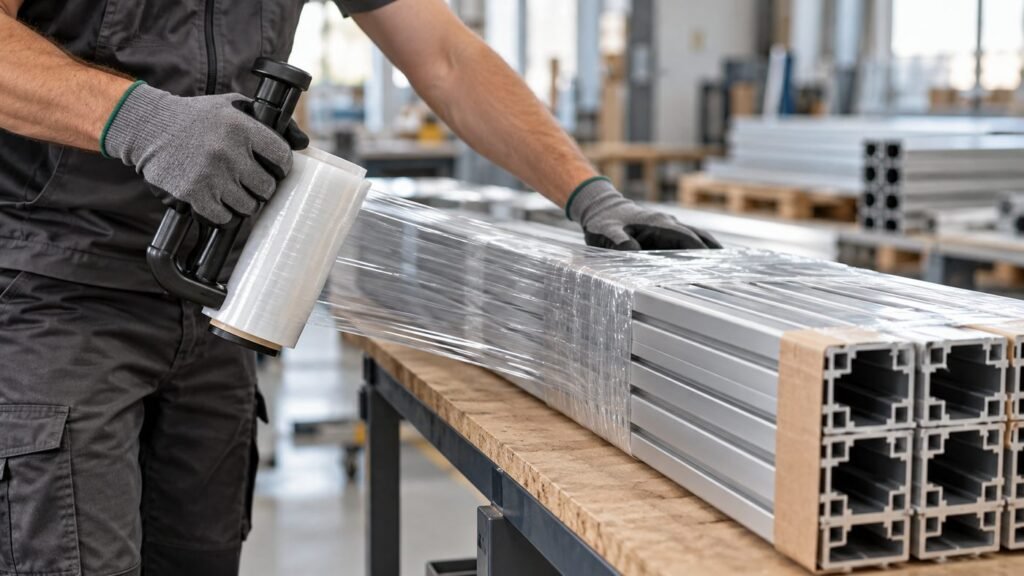
Hand stretch film is applied manually with a dispenser and suits low daily volumes, irregular loads, and sites without equipment. Machine stretch film is applied by a pallet wrapping machine and delivers higher pre-stretch, consistent tension, and a lower cost per pallet at high wrapping volumes. The right choice depends mainly on volume, load uniformity, and labour economics.
Table of Contents
- What Is Hand Stretch Film and Machine Stretch Film?
- How Are Hand and Machine Stretch Film Manufactured?
- What Types Are Available?
- Comparison: Hand vs Machine Stretch Film
- Common Applications
- What Specifications Should Buyers Check?
- How to Choose Between Hand and Machine Stretch Film
- How to Inspect Stretch Film Quality
- What Information Should Be Included in an RFQ?
- How to Choose a Reliable Stretch Film Supplier
- Frequently Asked Questions
- Source Hand and Machine Stretch Film from Pefilmpack
What Is Hand Stretch Film and Machine Stretch Film?
Both grades are stretch film—LLDPE-based film with high elongation and self-cling—but they are engineered for different application methods. Hand stretch film is wound into lighter rolls that an operator controls by feel, usually through a hand dispenser with an extended core or a brake system. Machine stretch film is wound into heavier, wider rolls that feed the powered pre-stretch carriage of a pallet wrapping machine, where film is stretched to a set ratio before being applied.
The distinction matters commercially because the two grades optimise for different cost structures. Hand film trades material efficiency for flexibility and zero equipment cost. Machine film requires capital equipment but converts less labour and less film into each wrapped pallet. Buyers who understand this trade-off can calculate their break-even volume instead of guessing.
Both grades belong to the PE stretch film family covered on the Pefilmpack PE stretch film category page.
How Are Hand and Machine Stretch Film Manufactured?
Both grades start on the same cast or blown extrusion lines. The differences appear in formulation, winding, and roll construction.
- Resin selection. Machine film formulations emphasise tolerance to high pre-stretch—elongation at break and elastic recovery. Hand film formulations emphasise comfortable unwind force and cling that works at low applied tension.
- Additive blending. Tackifier and slip levels are tuned per grade. Machine film needs cling that survives fast carriage rotation; hand film needs cling that bonds at the lower tensions of manual wrapping.
- Coextrusion. Three- and five-layer structures place cling on the inner face (single-sided cling) or both faces, and add a strong core layer for machine film, which is stretched harder in use.
- Gauge control. Online thickness measurement is especially critical for machine film, because a thin spot that a hand operator would absorb can cause a break at a pre-stretch carriage running at speed.
- Slitting. Standard machine widths (commonly 500 mm) and hand widths (commonly 450–500 mm) are slit with tight edge quality so film tracks straight on carriages and dispensers.
- Winding and core. Machine rolls use a 3” (76 mm) core with heavy roll weight to maximise uptime between changes. Hand rolls use lighter weights—and sometimes extended-core designs that act as their own handle—so operators can work comfortably.
- Inspection and packing. Both grades are checked for gauge, winding hardness, and appearance before carton packing and palletisation for export.
What Types Are Available?
Hand grade films
Standard hand rolls, extended-core rolls that need no dispenser, and pre-stretched hand films that require minimal force to apply. Pre-stretched hand film is popular where operator fatigue or training consistency is a concern, since it barely tightens or loosens after application.
Machine grade films
Grades tuned for standard pre-stretch carriages (commonly in the 150–200% range) and for power pre-stretch systems that run higher ratios. The right grade depends on your carriage’s capability, so machine film is always specified together with the machine model.
Blown and cast versions of both
Blown grades bring puncture resistance for sharp loads; cast grades bring clarity, quiet unwind, and consistent gauge. Both are available in hand and machine constructions.
Specialty films
Colored and black films in either grade for load concealment; vented film for produce and frozen goods; and narrow-width films for bundling small items.
Comparison: Hand vs Machine Stretch Film
| Attribute | Hand Stretch Film | Machine Stretch Film |
|---|---|---|
| Application | Manual dispenser or extended core | Pallet wrapping machine carriage |
| Daily volume fit | Low to moderate | Moderate to high |
| Typical thickness (industry common) | 12–20 micron | 15–30 micron |
| Pre-stretch achievable | Limited by operator (low) | 150–250%+ per carriage capability |
| Wrap consistency | Depends on operator skill and fatigue | Consistent tension and overlap |
| Equipment cost | Minimal (dispenser only) | Machine investment required |
| Labour per pallet | Higher | Lower |
| Film cost per pallet | Higher (little pre-stretch) | Lower (film stretched before use) |
| Roll weight | Lighter, easier handling | Heavier, longer uptime |
| Best suited to | Mixed loads, low volume, remote sites | Export lines, distribution centers |
Figures are industry-common ranges, not guaranteed values; requirements may vary by application, market and applicable standard.
Selection advice: below roughly twenty pallets per day, and where loads vary in size or shape, hand film usually wins on total cost because equipment investment cannot be recovered. Above that—especially with uniform carton pallets feeding regular container loading—machine film plus a wrapping machine typically pays back through lower film consumption and labour minutes per pallet.
Common Applications
Low-volume warehouses and workshops
Hand film covers occasional pallet dispatches, rework, and small-lot protection. It also serves mobile tasks—bundling pipes, protecting furniture during relocation—where a machine cannot reach.
High-volume export and production lines
Machine film is the standard for end-of-line pallet wrapping before container loading, where consistency across hundreds of pallets per shift matters for both cost and claims. Our article on machine-grade PE stretch film for high-speed pallet wrapping lines covers this environment in detail.
Mixed and irregular loads
Awkward, long, or lightweight items are often still hand-wrapped even in automated facilities, because an operator can judge where extra layers are needed. Blown hand film with high puncture resistance suits these loads.
Sites without power or space
Remote warehouses, temporary sites, and crowded facilities without floor space for equipment rely on hand film. Extended-core rolls remove even the dispenser from the process.
What Specifications Should Buyers Check?
For hand film:
- Roll weight and width—lighter rolls reduce fatigue but increase change frequency; widths commonly 450–500 mm.
- Core type—2” or 3” paper core, or extended core with no separate dispenser.
- Unwind force and cling behaviour—checked by feel on a sample roll rather than from a data sheet.
- Thickness—balanced against the sharpest edges on typical loads.
For machine film:
- Recommended pre-stretch ratio matched to the carriage (standard or power pre-stretch).
- Width, thickness, roll length and roll weight against carriage capacity—maximum roll diameter and weight.
- Core size, standard 3” (76 mm).
- Elongation at break and elastic recovery (ASTM D882 / ISO 527-3) relevant to carriage settings.
- Puncture resistance (ASTM D5748) for sharp loads; tear resistance (ASTM D1922) for nick tolerance.
- Gauge tolerance across the roll—the variable that most often explains unexplained breakage.
Specifications are typically agreed between buyer and supplier. Requirements may vary by application, market and applicable standard.
How to Choose Between Hand and Machine Stretch Film
- Count your pallets per day. This single figure frames the whole decision. Multiply it by film used per pallet and labour minutes per pallet, then compare the two methods in money.
- Assess load uniformity. Uniform carton pallets suit machine wrapping; highly variable or oversized loads often keep a hand-wrapping station even in automated plants.
- Check machine compatibility. For machine film, confirm carriage type, pre-stretch range, and roll capacity before ordering. For hand film, confirm dispenser type and roll weight your team can handle.
- Consider growth. Volume rising towards a few dozen pallets daily is usually the point where machine wrapping starts to pay back.
- Plan the transition. Many operations run both: machine film for standard export pallets, hand film for irregular items and rework. Ordering both grades from one supplier keeps quality consistent.
For buyers adding equipment alongside film, our overview of automatic stretch wrapping machines for export pallet packaging explains how machine selection and film specification are decided together, with details on the automatic stretch wrapping machine product page.
How to Inspect Stretch Film Quality
Suitable for pre-shipment inspection:
- Dimensional checks: width, thickness sampling, roll weight or length, core diameter, roll end faces.
- Appearance: gels, streaks, wrinkles, colour consistency for tinted grades.
- Unwind and cling check by hand on sample rolls.
- Packing, labels, and shipping marks against the purchase order.
Typically covered by supplier batch test records:
- Tensile and elongation (ASTM D882 / ISO 527-3).
- Puncture (ASTM D5748), tear (ASTM D1922), impact (ASTM D1709).
- Haze and transmittance (ASTM D1003) where clarity matters.
Application testing is decisive: run machine film on your actual carriage at production settings, and hand film with your dispensers and wrapping team. Watch for breakage frequency, coverage consistency, and how the wrap holds the load after 24 hours. An informed thickness and width selection combined with on-site testing prevents most quality disputes.
What Information Should Be Included in an RFQ?
- Grade: hand or machine film (and carriage type / machine model for machine film).
- Material and layer structure.
- Dimensions: width, thickness, roll length or roll weight.
- Core size and type (including extended core if required).
- Colour and printing requirements.
- Performance targets: pre-stretch tolerance, cling, puncture resistance.
- Applicable standard or test method, if required.
- Packing: rolls per carton, pallet configuration, OEM or private-label printing.
- Order quantity and trial order intention.
- Destination port and shipping terms.
- Application details: load weight, size, wrapping method, daily pallet volume.
- Current film sample or specification for benchmarking.
How to Choose a Reliable Stretch Film Supplier
- Grade range: a supplier producing both hand and machine grades can match film to your actual equipment instead of pushing a single stock product.
- Line capability: cast or blown lines, coextrusion layers, online gauge control, and slitting precision.
- Batch consistency: gauge tolerance, cling, and colour stability between runs—ask how it is monitored, not whether it exists.
- Machine-compatibility support: willingness to discuss carriage settings and run samples against your settings.
- Test reports: what methods were used, when, and what they do and do not cover.
- Sample policy: production-representative samples, not special runs.
- Customisation: width, thickness, roll weight, core, colour, private-label cartons.
- Export experience: container loading plans and documentation for your market.
- Complaint handling: defined assessment and replacement mechanism.
Treat quotations far below comparable resin cost, refusal to sample, and specification sheets without tolerances as warning signs.
Frequently Asked Questions
Can I use hand film on a wrapping machine?
No. Hand film is not formulated for high pre-stretch and will break frequently on a powered carriage, causing downtime and wasted film. Use a machine grade matched to your carriage and settings.
Can I apply machine film by hand?
It is physically possible but impractical: machine rolls are heavy and stiff, and the film’s cling and stiffness are tuned for mechanical tension rather than manual control. Hand rolls remain the practical choice for manual wrapping.
What pre-stretch ratio is typical for machine film?
Standard pre-stretch carriages commonly run in the 150–200% range and power pre-stretch systems higher, but the usable ratio depends on the film and the load. Verify with an on-machine test rather than trusting a ratio alone.
Is thinner film always cheaper?
Only if it wraps the same number of pallets without breakage or rewraps. Downgauging without matching the load and machine often raises total cost through breaks, extra layers, and damaged shipments. Compare cost per wrapped pallet, not price per roll.
What is pre-stretched hand film?
It is film stretched near its limit during manufacturing, so the operator applies little force and the wrap barely tightens afterwards. It suits teams concerned with fatigue and consistency, typically in lighter-duty applications.
Can hand and machine film share the same specification?
Width and core are often similar, but formulation, roll weight, and thickness targets differ. Specify each grade separately in the RFQ so the supplier can match each to its application.
Can we order both grades with our own branding?
Yes. Carton printing, roll labels, core colour, and film colour are all customisable from the factory. Provide artwork and packing requirements in the RFQ.
Source Hand and Machine Stretch Film from Pefilmpack
Weishan Litong Packing Material Co., Ltd. (Pefilmpack) manufactures both hand-grade and machine-grade PE stretch film for importers, distributors, logistics companies, warehouses, and export shippers. Width, thickness, roll weight, core size, colour, and printing are customisable, and our team helps match film grade to your wrapping method—whether that is a hand dispenser, a semi-automatic turntable, or an automatic wrapping line. As a factory-direct supplier, we support OEM packing, trial orders, and export packing arrangements suited to your destination market. Related packaging films—shrink film, cling film, and BOPP packing tape—can be consolidated into the same supply relationship to simplify sourcing.
Send Your Specifications: share your grade (hand or machine), width, thickness, roll weight, cling requirement, packaging preference, order quantity, and destination port through our contact page, and we will recommend a specification with samples for testing.